- home
- BAKERECIPES
BakeRecipes
Bringing real baking into your home with deliciously simple recipes.
Prep 40min (+ 20min cooling time)
Bake 20minMakes about 15
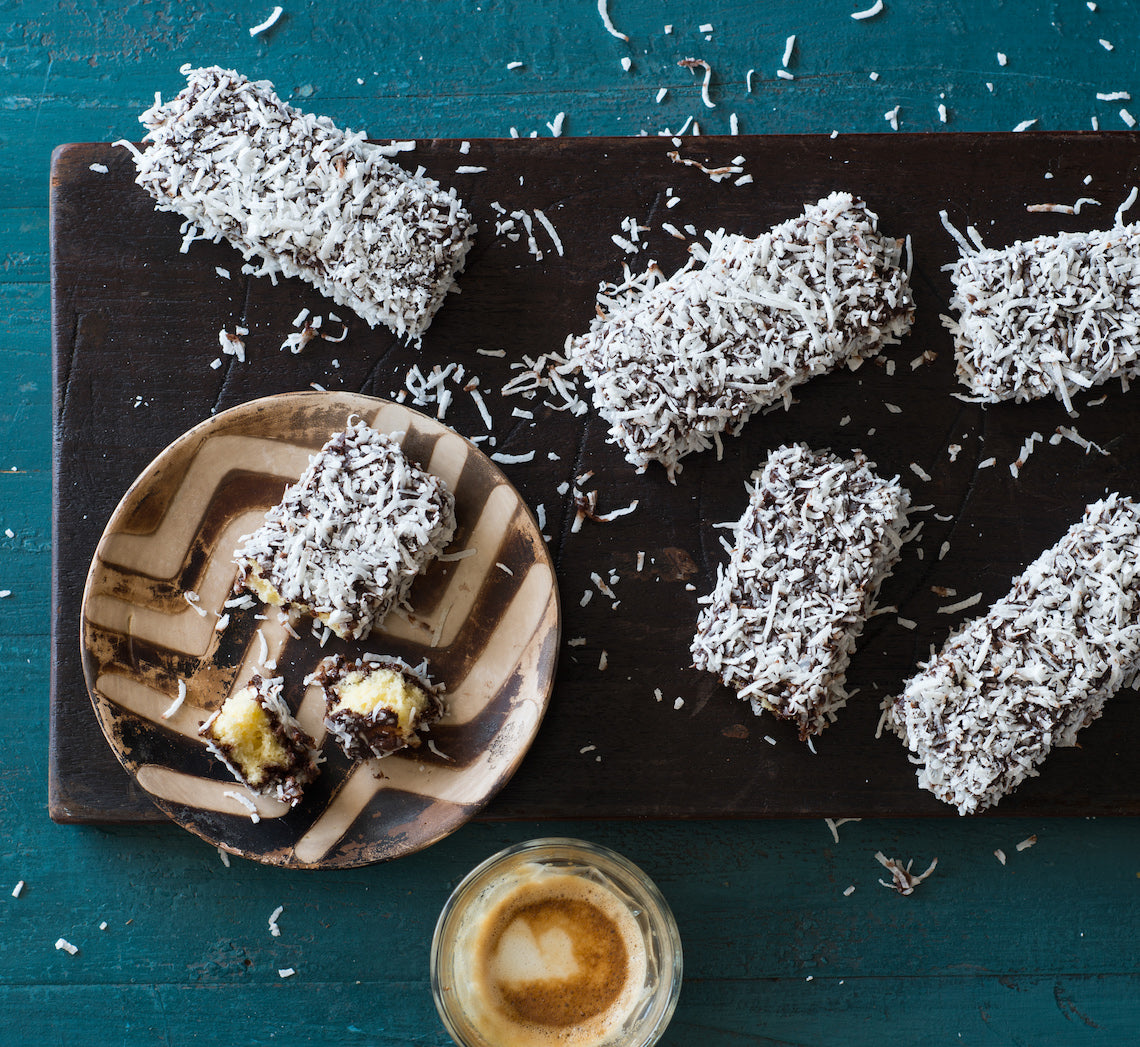
Who doesn't love a lamington? Believe it or not, this iconic Australian cake dates back over 100 years. These lamingtons of mine are based on a super simple, super quick, one-bowl recipe that requires no fussing at all. It is baked in a thin layer and then cut into fingers – the resulting lamingtons don't have the height of the traditionally sized ones, but it does mean you get more chocolate icing and coconut with each piece of butter cake – a little cheeky, but definitely a good thing! Feel free to use desiccated or flaked coconut instead of the shredded, depending on what 'look' you want for your lamingtons.
Ingredients
195g (3 cups) shredded coconut, to coatButtercake
110g (¾ cup) self-raising flour75g (½ cup) plain flour
165g (¾ cup) caster sugar
125g salted butter, at room temperature
80ml (⅓ cup) milk
2 eggs, at room temperature
1 teaspoon natural vanilla extract or essence
Chocolate icing
465g (3¾ cups) pure icing sugar55g (¼ cup) cocoa powder
150ml boiling water
1½ teaspoons vanilla essence
Method
- To make the buttercake, preheat the oven to 180°C (160°C fan-forced). Grease a 20 x 30cm (base measurement) shallow cake tin and line the base and two longs sides with one piece of baking paper.
- Place both the flours, sugar, butter, milk, eggs and vanilla in a large mixing bowl. Use an electric mixer to beat on low speed until combined. Increase the speed to medium and beat for 3 minutes or until the mixture is well combined and very pale in colour. Spoon the mixture into the lined tin and spread evenly using the back of a spoon.
- Bake for 20 minutes or until cooked when tested with a skewer. Cool for 5 minutes in the tin, then turn onto a wire rack to cool.
- Cut the cooled cake into 15 equal ‘fingers’ (each will be about 4 x 10cm).
- To make the chocolate icing, sift the icing sugar and cocoa powder into a medium bowl. Add the boiling water and vanilla and stir until smooth (it should be the consistency of pouring cream).
- Spread the coconut on a tray or plate. Rest a cake ‘finger’ on a fork and dip it into the icing to coat (see Baker’s tips). Lift it out and allow any extra icing to drip off. Roll the cake ‘finger’ in the coconut to coat evenly. Place on a wire rack to set. Repeat with the remaining cake ‘fingers’, icing and coconut.
Baker's Tips
- You can also spoon the icing over the cake to help coat it.
- If the icing becomes too thick while you are coating the cake pieces, stir in enough extra boiling water, adding it a teaspoon at a time, to thin to the right consistency.
- These lamingtons will keep in an airtight container in a cool spot, but not in the fridge, for up to 2 days.
This recipe is from Anneka's SBS Food online column Bakeproof: Lamingtons. CLICK HERE for more Bakeproof recipes.
Photography by Alan Benson.
Prep 30minBake 40-45minMakes 10-12 serves
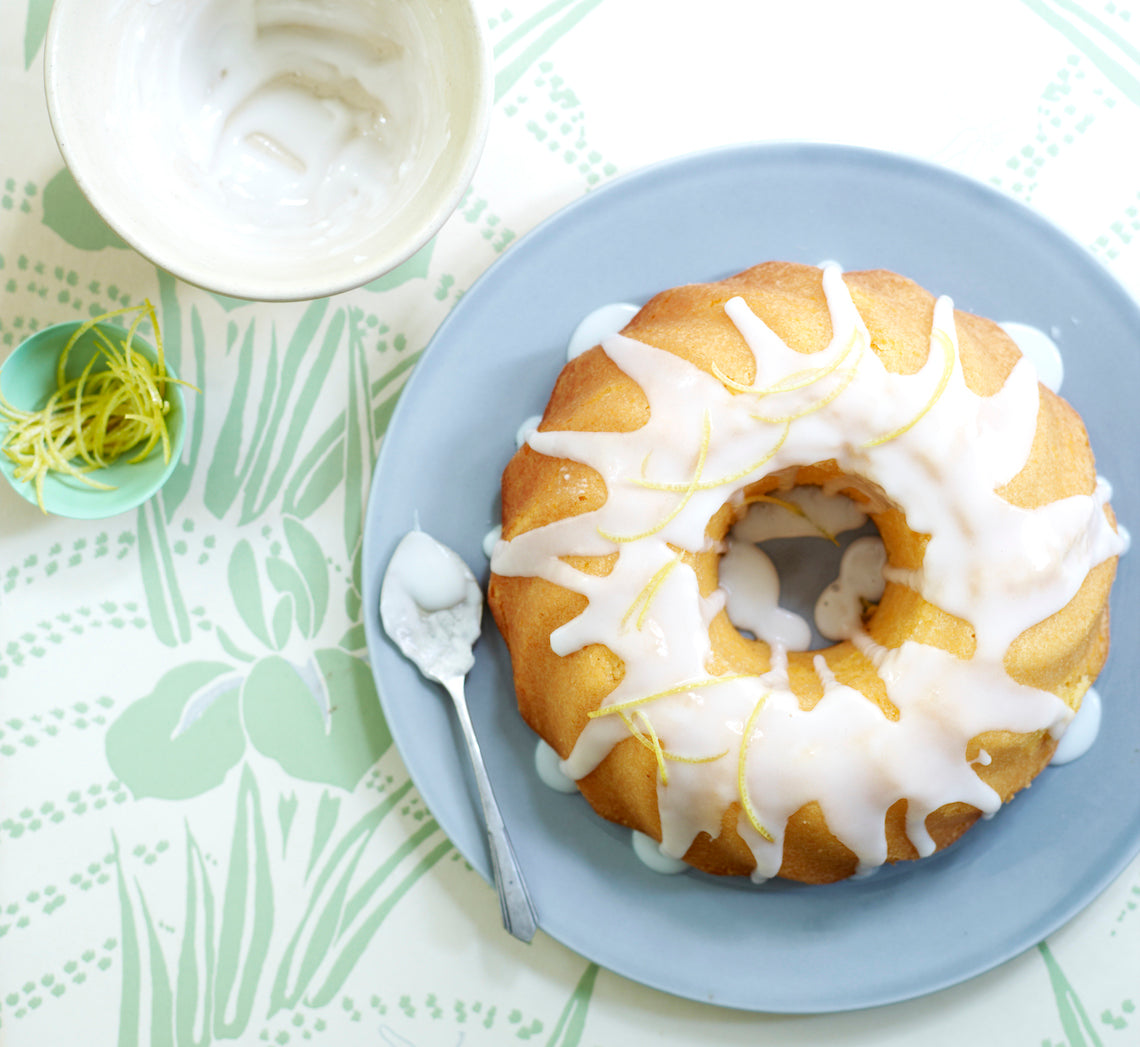
Lemon buttercake is something from heaven – rich, tart and mor-ish all at the same time… And when teamed with coconut it becomes sublime! This cake is particularly good for afternoon tea or dessert when teamed with vanilla ice-cream.
Ingredients
150g salted butter, softened
220g (1 cup) caster sugar
Finely grated zest of 2 lemons
3 eggs
300g (2 cups) self-raising flour
45g (½ cup) desiccated coconut
125ml (½ cup) milk
Candied Lemon Strips
220g (1 cup) caster sugar
250ml (1 cup) water
Lemon Drizzle Icing
125g (1 cup) pure icing sugar4-5 teaspoons strained fresh lemon juice
Method
- Preheat the oven to 170°C (150°C fan-forced). Grease a 24cm (top measurement) or 2.5 litre (10 cup) capacity fluted ring tin with the melted butter and dust with flour to lightly coat, tapping out any excess.
- Use an electric mixer to beat the butter, sugar and lemon rind in a large mixing bowl, scraping down the sides when necessary, until very pale and creamy. Add the eggs one at a time, beating well after each addition until well combined.
- Combine the flour and coconut. Add half of the flour mix to the butter mixture and mix on lowest speed possible until just combined. Add the milk and mix on lowest possible speed until just combined. Add the remaining flour mix and beat on lowest possible speed until just combined.
- Spoon the mixture into the prepared tin and use the back of a spoon to smooth the surface. Bake for 40-45 minutes or until a skewer inserted into the centre comes out clean. Stand the cake in the tin for 5 minutes to cool slightly before turning onto a wire rack sitting over a tray or plate.
- While the cake is cooling make the Candied Lemon Strips. Use a vegetable peeler to remove the rind in wide strips from the lemon. Use a small sharp knife to remove any white pith from the rind and then cut the rind into thin strips. Combine the sugar, water and lemon rind strips in small saucepan. Stir over medium heat until the sugar dissolves. Bring to a simmer and simmer for 10 minutes or until translucent. Use a fork to transfer the rind from the syrup to a plate, separating the strands. Set aside.
- When the cake is cool, make the Lemon Drizzle Icing. Sift the icing sugar into a medium bowl. Add 4 teaspoons of the lemon juice and stir until smooth and is a heavy coating consistency, adding a little more lemon juice, ¼ teaspoon at a time, until the desired consistency is reached. Use a spoon to drizzle the icing over the cake allowing it to run down the sides. Set aside for 10 minutes or until the icing sets.
- Transfer the cake to a serving plate, decorate with the Candied Lemon Strips and serve in wedges.
Baker's Tip
- This cake will keep in an airtight container for up to 2 days.
Prep 20min (+2hr cooling time)Bake 1hr15minMakes 8-10 serves
I remember my mum making pavlova for my dad’s surprise 40th birthday party – lots of them. They were hidden all over the house, even under my bed. Pavlova is definitely a crowd pleaser and Mum chose the right dessert for a party. This pavlova is finished with a slightly tart topping of poached apricots infused with lemon – the perfect partner for the sweet meringue base.
Ingredients
Melted butter, to grease4 egg whites, at room temperature
Pinch of salt
2 teaspoons cornflour
1 teaspoon white vinegar
220g (1 cup) caster sugar
1½ teaspoons natural vanilla extract
300ml thickened cream
Poached Apricot & Lemon Topping
2 lemons, washed220g (1 cup) caster sugar
185ml (¾ cup) water
250g dried apricot halves
Method
- Place the oven rack in the lower third of the oven and then preheat it to 110°C. Draw a circle on a piece of baking paper using a 20cm cake tin as a guide. Place the baking paper, marked side down, on a baking tray.
- Place the egg whites in a large mixing bowl and use an electric mixer with a whisk attachment to whisk on medium speed until foamy. Add the salt, vinegar and cornflour and whisk on medium speed until soft peaks form (this will take about 1 minute).
- With the motor running, add the sugar a spoonful at a time, whisking well after each addition, until all the sugar has dissolved and the mixture is very thick and glossy (this will take 4-5 minutes). Add the vanilla and whisk to combine. Use a spatula to stir the meringue mixture to ‘loosen’ it slightly (this will get rid of any excess air in the mixture and give it a smoother, less ‘foamy’ texture).
- Spoon the meringue mixture onto the lined tray and use the back of the spoon to spread it to fill the marked circle. Make a well in the centre and build up the sides, creating swirls or smoothing the surface as desired.
- Bake in preheated oven for 1 hour 15 minutes, until the meringue is crisp and hard to touch, but not coloured. When the pavlova is cooked, turn off the oven, leave the door slightly ajar (see Baker’s Tips) and cool it completely in the oven (this will take about 2 hours).
- To make the Poached Apricot & Lemon Topping, use a vegetable peeler to remove the rind from the lemons in wide strips. Remove any white pith on the rind with a small sharp knife. Juice the lemons and measure out 80ml (⅓ cup) lemon juice. Put the lemon rind strips and juice, sugar and water in a small saucepan. Stir with a wooden spoon over medium heat until the sugar dissolves. Add the apricots and bring to the boil. Reduce the heat to medium and simmer for 8–10 minutes or until the apricots are plump and tender and the syrup has reduced slightly. Remove from the heat and set aside to cool.
- To serve, use an electric mixer with a whisk attachment or a balloon whisk to whisk the cream until soft peaks form. Spoon the whipped cream into the centre of the pavlova and spread evenly. Spoon the apricots and lemon rind over the cream and then spoon a little of the poaching syrup over the top. Serve immediately with any remaining syrup served separately.
Baker's Tips
- Use a wooden spoon to keep the oven door ajar if it won’t stay slightly open on its own when cooling the pavlova.
- The unfilled pavlova shell will keep in an airtight container in a cool place (not the fridge), for up to 1 day.
Photography by Julie Renouf.
Prep 15minBake 50-60minMakes 8-10 serves
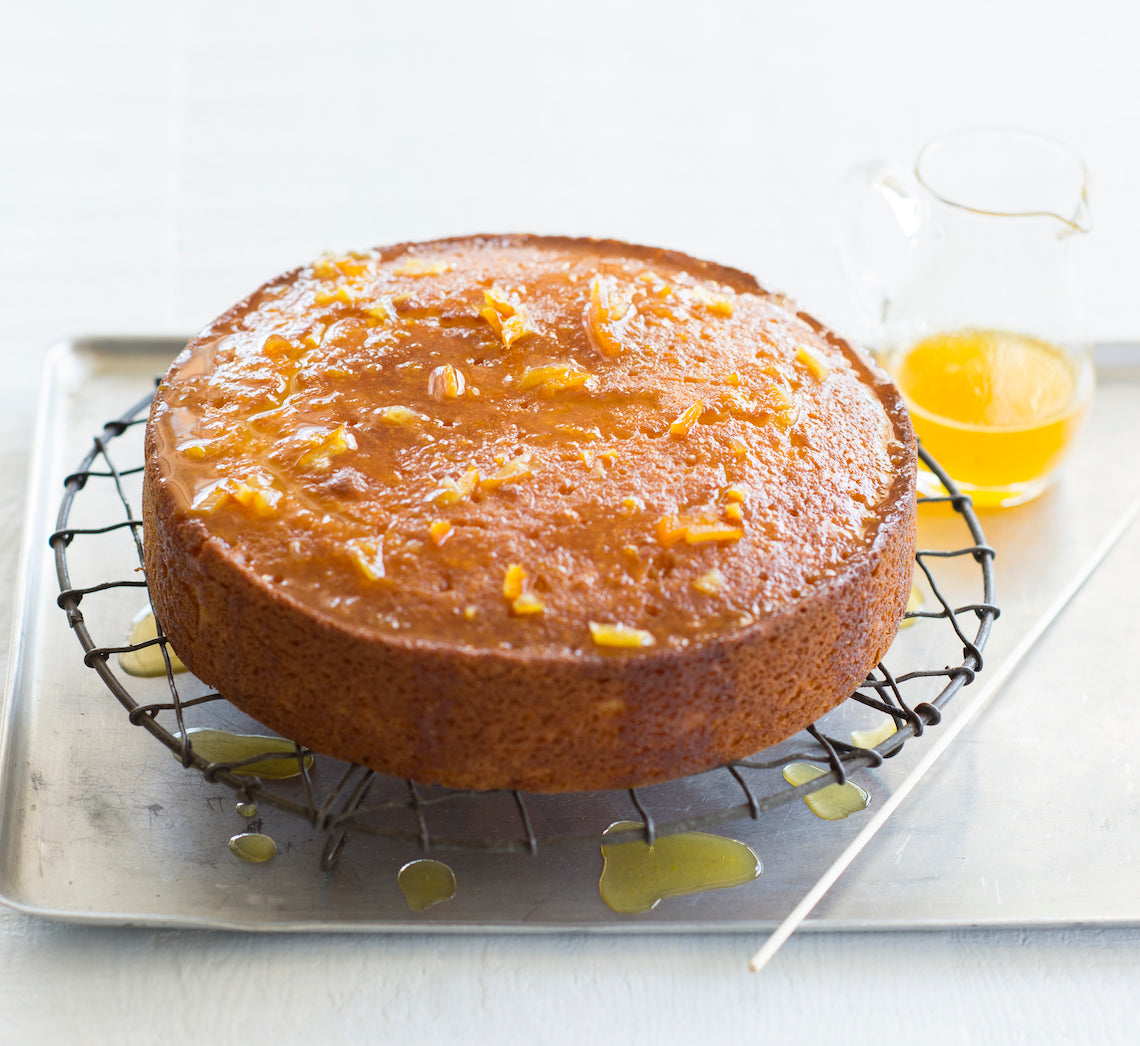
This is a wonderful cake that was originally inspired by a recipe my Aunt Joey used to make. No, it isn’t a mistake, a whole orange, rind and all goes into this cake. It is best to use a thin-skinned navel orange that is around in winter and spring, as it has no seeds and very little bitter pith.
It makes a wonderful dessert when served warm with vanilla ice-cream or a perfect picnic cake as it travels really well. The syrup keeps this cake deliciously moist and saves you from icing it – another great shortcut. If however you would prefer to ice it, a buttercream or glace icing flavoured with finely grated orange zest would be perfect.
Ingredients
Melted butter, to grease
1 orange (about 240g/8½oz), quartered, core and seeds removed
220g (1 cup/7¾oz) caster sugar
125g (4½oz) salted butter, melted and cooled
2 eggs, at room temperature
225g (1½ cups/8oz) self-raising flour
Orange syrup
250ml (1 cup/9fl oz) strained freshly squeezed orange juice
160g (½ cup/5¾oz) orange marmalade
75g (⅓ cup/2¾oz) caster sugar
Method
- Preheat oven to 170°C/340°F (150°C/300°F fan-forced). Grease a 20cm/8in round cake tin with melted butter and line the base with non-stick baking paper
- Place the quartered orange, sugar, butter and eggs in the bowl of a food processor. Process until the orange is finely chopped. Add the flour and process using the pulse button until just combined.
- Pour the mixture into the prepared tin and use the back of a spoon to smooth the surface. Bake in preheated oven for 50-60 or until a skewer inserted into the centre comes out clean. Remove from the oven and set aside for 5 minutes before turning onto a wire rack. Stand the rack over a baking tray.
- Meanwhile, to make the Orange Syrup, place the orange juice, marmalade and sugar in a small saucepan. Stir over medium heat until the sugar dissolves. Increase the heat to high and bring to the boil. Boil gently, uncovered and without stirring, for 5 minutes or until reduced slightly.
- Use a skewer to prick cake all over. Gradually pour the hot syrup over the hot cake, allowing it to soak in. Pour any syrup that has collected on the tray into a dish or jug, Serve warm or at room temperature with any syrup caught on the tray in a jug on the side.
Baker's Tips
- This cake will keep in an airtight container at room temperature for up to 4 days.
Image: Alan Benson
Prep 15minBake 12-15min (per batch)Makes about 20
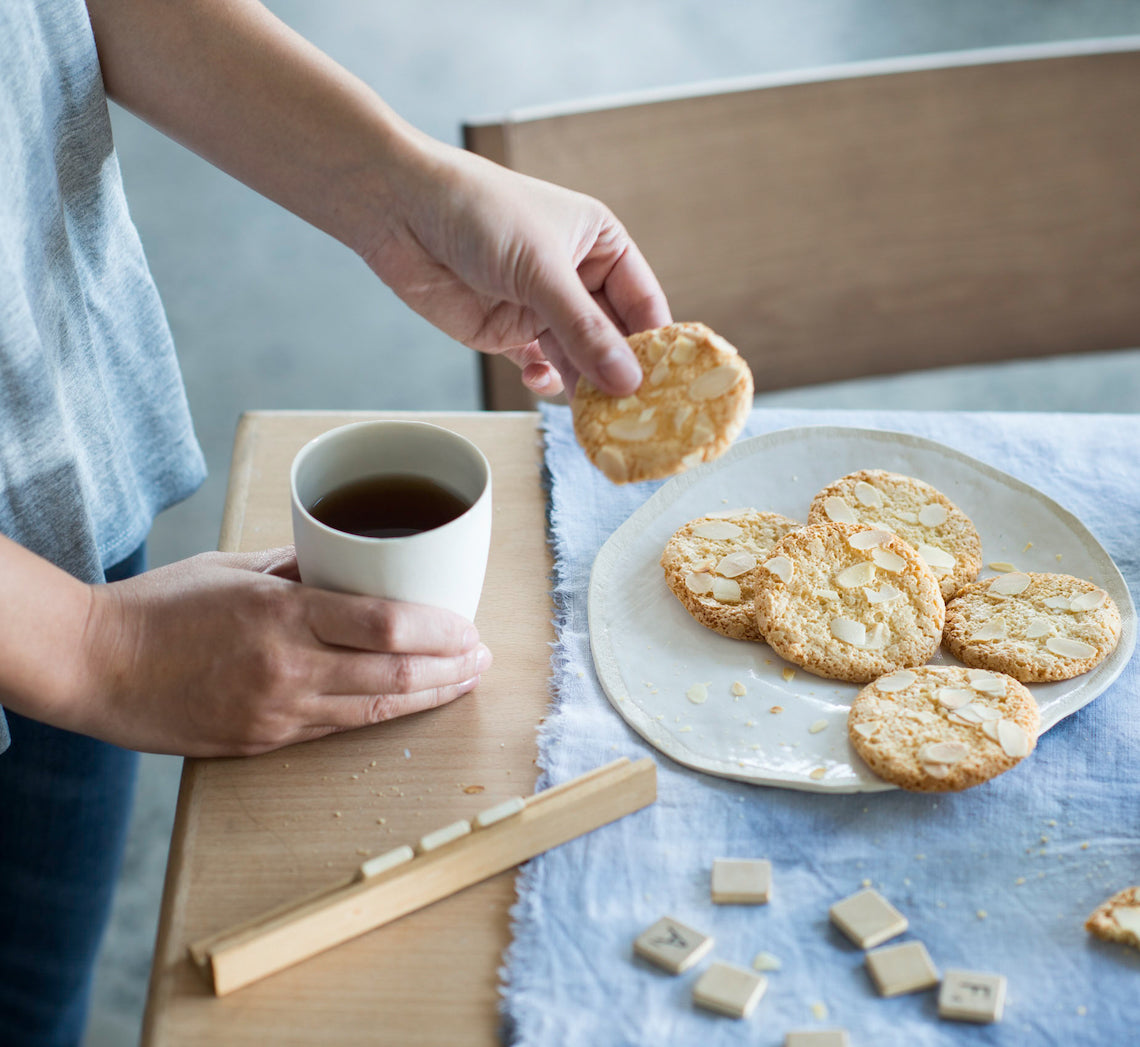
These macaroons are commonly crumbled and used in the traditional Danish Lagkage (layer cake), a traditional Danish birthday cake. They are wonderfully crisp on the outside while being mor-ishly soft on the inside and are truly addictive as a ‘sweet’ treat. While not traditional, I’ve taken the liberty of adding a sprinkling of flaked almonds for extra texture.
Ingredients
100g almond meal100g pure icing sugar, sifted
Good pinch of bicarbonate of soda
2 egg whites, at room temperature
Pinch of salt
25g (¼ cup) flaked almonds, to sprinkle
Method
- Preheat the oven to 180°C. Line a large baking tray with non-stick baking paper.
- Put the almond meal, icing sugar and bicarbonate of soda in a medium bowl and mix until evenly combined.
- Use an electric mixer with a whisk attachment to whisk the egg whites and salt in a medium clean, dry bowl until stiff peaks form. Add the almond meal and icing sugar mixture and use a spatula or large metal spoon to fold together until evenly combined.
- Use two metal teaspoons to spoon slightly heaped spoonfuls of the mixture onto the lined tray about 4 cm apart to allow for spreading. Sprinkle with the flaked almonds and then bake in the third top of the preheated oven for 12-15 minutes or until golden and aromatic.
- Cool the macaroons on the tray. Repeat with the remaining mixture to make about 20 macaroons in total.
Baker's Tips
- These macaroons will keep in an airtight container at room temperature for up to 1 week.
This recipe is from Anneka's SBS Food online column, Bakeproof: Danish Baking. CLICK HERE for more Bakeproof recipes.
Photography by Alan Benson.
Prep 30min (+overnight +45min resting timeBake 20-25minMakes 12
Danish pastries are possibly Denmark’s most well-recognized food specialty, even though it is Austria that should actually be credited for originally creating them! Traditionally based on a leavened puff pastry (basically a puff pastry made with a yeast dough) the making of them is quite an involved process. Luckily, the pastry used here is a short-cut one with chunks of butter already incorporated into the pastry when initially mixed which cuts out the process of interleaving it with the pastry dough as you fold it – if you haven’t made puff pastry before, this is a great recipe to start with.
Ingredients
- 125ml (½ cup) lukewarm milk
- 7g (1 sachet) dried yeast
- 250g (1⅔ cups) plain flour
- 185g butter, chilled and cut into 2 cm cubes
- 1 egg, at room temperature, lightly whisked
- 2 tablespoons caster sugar
- ¼ teaspoon ground cardamom
- 5 tablespoons good-quality raspberry jam
- 2 tablespoons flaked almonds, toasted, to decorate
Icing
- 125g (1 cup) pure icing sugar
- 1 tablespoon boiling water
- ¼ teaspoon natural almond extract
Method
- Put the milk in a large bowl and sprinkle the yeast over the top. Set aside for 5 minutes.
- Put the flour and butter into the bowl of a food processor and use the pulse button to process until the butter is cut into 1 cm pieces (make sure your don’t process any further). Transfer to a large bowl.
- Add the egg, sugar and cardamom to the milk mixture and stir to combine. Add the flour and butter mixture and use a wooden spoon and then your hands to mix until it is just combined. Cover the bowl with plastic wrap and place in the fridge overnight.
- Turn the dough onto a lightly floured surface and bring together with your hands. Knead for 30 seconds or until smooth. Shape into a rectangle and then use a lightly floured rolling pin to roll the out until about 40 x 25cm, keeping the edges as straight as possible. With a long side nearest to you, fold the right third of the dough in to cover the centre third and then fold the left side in also. Turn the dough clockwise a quarter turn. Fold the dough into thirds as before to make a small rectangle. Flip the dough over on the bench and repeat the rolling and folding process again. You will finish with a small rectangle. Wrap well in plastic wrap and chill for 30 minutes.
- Preheat the oven to 200°C. Line a baking tray with non-stick baking paper.
- Roll out the pastry with a lightly floured rolling pin on a lightly floured surface to a rectangle about (30 x 35cm) and about 5mm thick. Cut in half to make two 15 x 35cm rectangles. Spread the raspberry jam down the centre to cover the centre third of both rectangles. Cut the pastry diagonally into 2cm-wide strips down both sides of the jam and then fold the strips, alternating form each side, into the centre over the jam. Transfer the pastries on the lined tray. Cover loosely with a slightly damp tea towel and set aside in a warm, draught-free place for 15 minutes or until the pastry is ‘puffy’.
- Bake in preheated oven for 20-25 minutes or until the pastry is golden, crisp and cooked through. Remove from oven and cool on the tray.
- To make the Icing, put the icing sugar in a medium bowl and stir in the water and almond extract to make a smooth pouring consistency. Drizzle over the cooled pastry and sprinkle with the almonds and set aside to set. Serve at room temperature cut into slices.
Baker's Tips
- This Danish Pastry is best eaten the day it is baked but will keep in an airtight container for up to 2 days.
This recipe is from Anneka's SBS Food online column, Bakeproof: Danish Baking.
CLICK HERE for more Bakeproof recipes.
Photography by Alan Benson.
Prep 15minBake 18-20minMakes about 18
Reminiscent of the good old Digestives, these biscuits easily swing between savoury and sweet. Serve them with blue cheese or dip them in dark chocolate to give them the flavour preference you prefer.
Ingredients
150g (5¼oz) wholemeal plain flour
130g (1 cup/4½oz) oat bran
75g (⅓ cup, firmly packed/2¾oz) brown sugar
1 teaspoon baking powder
½ teaspoon salt
125g (4½oz) chilled salted butter, cubed
60ml (¼ cup/2fl oz) milk
Method
- Preheat oven to 180°C/350°F (160°C/315°F). Line two oven trays with non-stick baking paper.
- Put the flour, oat bran, brown sugar, baking powder, salt and butter in the bowl of a food processor and process until the mixture resembles breadcrumbs. Sprinkle the mixture with the milk and use the pulse button to process until the mixture starts to come together as a dough. Transfer the mixture to a bowl and bring it together with your hands.
- Turn the dough onto a lightly floured surface and use a lightly floured rolling pin to roll out until about 5mm/¼in thick. Use a 6cm/2¼in round cutter to cut the dough into discs and place them on the lined trays about 3cm/1¼in apart. Prick the tops of each biscuit twice with a fork. Re-roll any off cuts and cut out more biscuits.
- Bake in preheated oven for 18-20 minutes or until golden around the edges, aromatic and cooked through. Cool on the trays.
Baker's Tip
- These biscuits will keep in an airtight container at room temperature for up to 1 week.
Prep 15minBake 25-30minMakes about 20
Simple and super quick to make, these shortbread will satisfy even the most hard-core chocoholic! For extra crunch, try adding some chopped roasted hazelnuts to the mixture with the chopped chocolate.
Ingredients
150g (5¼oz) chilled unsalted butter, diced
110g (½ cup, firmly packed/4oz) brown sugar
110g (¾ cup/4oz) plain flour
30g (⅓ cup/1oz) cornflour
30g (¼ cup/1oz) cocoa powder, sifted
75g (⅔ cup/2¾oz) hazelnut meal
1 teaspoon natural vanilla extract or essence
100g (3½oz) good-quality dark chocolate, chopped
Method
- Preheat the oven to 160°C/315°F (140°C/285°F fan-forced). Line two large oven trays with non-stick baking paper.
- Place the butter, sugar, flour, cornflour, cocoa powder, hazelnut meal and vanilla in the bowl of a food processor (see Baker's Tips) and process for 1 minute or until the mixture just starts to form a dough (be careful not to over-mix).
- Transfer the mixture to a medium bowl, add the chopped chocolate and bring together with your hands to combine evenly.
- Roll tablespoonfuls of the mixture into balls and place on the lined trays about 5cm/2in apart. Flatten each with a fork, creating a criss-cross pattern, so that they are about 1cm/½in thick.
- Bake for 25-30 minutes, swapping the trays halfway through baking, or until cooked through. Remove from the oven and cool on the trays.
Baker's Tips
- If you don’t have a food processor, you can make these shortbread by hand. Leave the butter at room temperature for a little while for it to soften slightly. Put the sugar, flour, cornflour, cocoa powder and hazelnut meal in a medium bowl. Sprinkle with the vanilla and then use your fingertips to rub the butter through the dry ingredients until it starts to come together and forms a dough. Continue the recipe from Step 3.
- These shortbread will keep in an airtight container at room temperature for up to 1 week.
This recipe is from Anneka's SBS Food online column, Bakeproof: Cookies in a hurry. CLICK HERE for more Bakeproof recipes.
Photography by Alan Benson.
Prep 20min (+25min cooling time)Bake 30minMakes 8 serves
Hailing from the 70s and reaching peak popularity in the 90s, sticky toffee pudding now sits alongside the likes of lemon delicious, rice pudding and chocolate fondants as a classic. Sweet, sticky and completely addictive, it is always a crowd pleaser.
Ingredients
200g fresh dates, pitted and chopped250ml (1 cup) water
1 teaspoon bicarbonate of soda
100g unsalted butter, at room temperature
150g (¾ cup, firmly packed) brown sugar
2 eggs
150g (1 cup) self-raising flour
Cream or vanilla ice cream, to serve
100g unsalted butter, cubed
200g (1 cup, firmly packed) brown sugar
250ml (1 cup) pouring cream
Method
- Preheat oven to 180°C. Grease a 18 x 28cm shallow cake tin with melted butter and line the base and two long sides with one piece of baking paper, allowing the paper to overhang the sides.
- Place the dates and water in a small saucepan, bring to the boil over medium heat and simmer for 3-5 minutes or until pulpy. Stir in the bicarbonate of soda and then set aside for 20 minutes or until cooled to room temperature.
- Use an electric mixer to beat the butter and sugar in a medium bowl until pale and creamy. Add the eggs, one at a time, beating well after each addition. Use a large metal spoon or spatula to fold in the cooled date mixture and then the flour until just combined.
- Spoon the mixture into the prepared tin and smooth the surface with the back of a spoon. Bake in preheated oven for 30 minutes or until cooked when tested with a skewer.
- Meanwhile, to make the toffee sauce, put the butter, sugar and cream in a medium saucepan and stir over medium heat until the butter melts and the sugar dissolves. Bring to a simmer for 3 minutes.
- Remove the pudding from the oven and pour a quarter of the hot toffee sauce over. Set aside for 5 minutes. Remove the warm pudding from the tin, cut into portions and serve drizzled with the remaining warm toffee sauce and accompanied by cream or ice-cream.
Baker's Tips
- Any leftover pudding and sauce will keep in an airtight container in the fridge for up to 4 days. Reheat both separately in the microwave on medium in 1-minute bursts until warmed through.
This recipe is from Anneka's SBS Food online column, Bakeproof: Comfort Puddings. CLICK HERE for more Bakeproof recipes.
Photography by Alan Benson.
Prep 15min (+20-30min chilling time)Makes: Enough for a 23cm/9in round tart case
A really good, well-made, homemade pastry is always the secret to a fabulous pie or tart and shortcrust pastry, when you have a good recipe, is one of the simplest and quickest pastries to make. Here I have given lots of making ahead and freezing tips as well as some great variations to use in a selection of both sweet and savoury tarts and pies.
Ingredients
225g (1½ cups/8oz) plain flourGood pinch salt
150g (5¼oz) chilled unsalted butter, diced
3-3½ tablespoons (60-70ml/2½fl oz) iced water
Method
- Combine the flour and salt in a large, wide mixing bowl. Add the chilled butter. With your palms facing upwards, use your fingertips to rub in the butter until the mixture resembles breadcrumbs with some larger pieces of butter still visible.
- Sprinkle 3 tablespoons (60ml/2fl oz) of the iced water over the flour and butter mixture. Use a butter or round-ended knife in a cutting motion to mix, turning the bowl frequently, until evenly combined and the mixture starts holding together. Press a little of the mixture between your fingers – if it holds together easily, there is no need to add more water; if it doesn’t add the remaining 1⁄2 tablespoon (10ml/⅓fl oz), a teaspoon at a time, combining with the knife until it reaches the right consistency. The pastry should be soft but not sticky.
- Bring the pastry together with your hands in the bowl or turn out onto a cool bench top and then bring together. Lightly knead the pastry with your fingertips for about 5-10 seconds or until it comes together but isn’t completely smooth. Shape the pastry into a disc about 2cm/¾in thick, wrap well in plastic wrap, baking paper or beeswax wrap and place in the fridge for 20-30 minutes to rest. Use as directed.
Baker's Tips
This pastry is also enough for a 24cm/9½in square tart case; ten 6cm/2¼in or eight 8cm/3¼in) individual round tart cases; a 12cmx34.5cm/4¾inx13½in) rectangular tart case; or 24 tartlet cases (1 Tbsp/20ml/¾fl oz capacity)
Making Ahead
Keeping in the fridgeShape uncooked pastry into a disc. Wrap well in plastic wrap and keep in the fridge for up to 3 days. Stand at room temperature for about 1 hour (depending on the temperature in your kitchen) until softened slightly and pliable enough to roll easily.
Freezing uncooked pastry
Shape uncooked pastry into a disc. Wrap well in plastic wrap, then seal in a freezer bag or airtight container and freeze for up to 6 months. Transfer to the fridge to thaw completely (this will take about 1 day). Stand at room temperature for about 1 hour (depending on the weather) until softened slightly and pliable enough to roll easily.
Freezing uncooked pastry case/s
Place the pastry case, still in the tin or dish, in the freezer until frozen. Once frozen, leave the pastry in the tin or dish or remove and seal in freezer bag or an airtight container. Freeze for up to 6 months. Bake in the tin or dish directly from the freezer or transfer to the fridge to thaw completely in the tin or dish (this will take about 1 day) and then bake as directed.
Variations
- Rich Shortcrust Pastry: Increase the butter to 170g (6oz). Replace the water with 1 lightly whisked egg yolk.
- Parmesan Shortcrust Pastry: Combine 40g (½ cup/1½oz) finely grated parmesan to the flour and butter mixture just before adding the water.
- Mustard Shortcrust Pastry: Add 1½ teaspoons dry mustard powder to the flour and salt before rubbing in the butter.
- Sweet Shortcrust Pastry: Stir 2 tablespoons sifted icing sugar or caster sugar to the flour and butter mixture just before adding the water.
- Chocolate Shortcrust Pastry: Reduce the flour to 200g (1⅓cups/7oz). Sift the flour with 2 tablespoons cocoa powder and 2 tablespoons icing sugar and the salt before rubbing in the butter.
- Sweet Orange & Vanilla Shortcrust Pastry: Reduce the flour to 200g (1⅓cups/7oz). Add 2 tablespoons almond meal, 2 tablespoons caster or icing sugar and 1 teaspoon finely grated orange zest to the flour and salt before rubbing in the butter. Add 1 teaspoon natural vanilla essence or extract with the water.
This recipe is from Anneka's SBS Food online column, Bakeproof: Never-fail Shortcrust Pastry. CLICK HERE for more Bakeproof recipes.
Photography by Alan Benson.
Prep 15minBake 50minMakes 12 serves
Serve with milk and a dollop of Greek-style yoghurt for a satisfying and tasty breakfast that will take you through to lunchtime without the need to nibble.
Ingredients
300g (3 cups) rolled oats75g (½ cup) pumpkin seeds (pepitas)
75g (½ cup) sunflower seeds
65g (1 cup) shredded coconut
100g natural almonds, coarsely chopped
1 teaspoon ground cinnamon
125ml (½ cup) unsweetened apple juice
2 tablespoons single-origin floral honey
90g (½ cup) dried blueberries (see Baker’s Tips)
Milk, Greek-style yoghurt and coarsely grated apple or other fresh fruit of your choice
Method
- Preheat oven to 160°C. Line a large oven tray with non-stick baking paper.
- Combine the oats, pumpkin seeds, sunflower seeds, coconut, almonds and cinnamon in a large bowl. Pour over the apple juice and stir until evenly combined. Spread evenly on the oven tray and then drizzle evenly with the honey.
- Bake in preheated oven for 50 minutes, stirring about every 10 minutes, until evenly toasted and crisp (the muesli will crispen further once cooled). Remove from the oven and set aside to cool. Stir in the blueberries.
- Serve with milk, yoghurt and apple or fruit of your choice.
Baker's Tips
- Store the toasted muesli in and airtight container or jar for up to 1 month.
- You can use 75g (½ cup) currants in place of the dried blueberries.
- This muesli (without the blueberries) makes a wonderful crumble topping. Reduce the baking time to 20 minutes.
Variation
Almond & Blueberry Bircher Muesli (for 3 serves): combine 1½ cups of Toasted Almond & Blueberry Muesli, 185ml (¾ cup) natural apple juice, 95g (⅓ cup) natural Greek-style yoghurt, and ½ large red apple (such as pink lady), coarsely grated. Cover and place in the fridge for 1 hour or until the muesli has soaked up the liquid and is creamy. Serve topped with yoghurt, coarsely grated apple and coarsely chopped toasted almonds. Keep any remaining muesli covered in the fridge for up to 3 days.